Volver al principio de la página


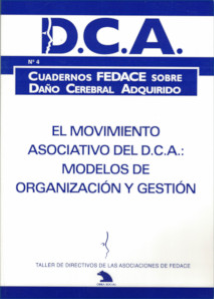
El movimiento asociativo del Daño Cerebral Adquirido : modelos de organización y gestión. Taller de directivos de las asociaciones de FEDACE (Cuadernos sobre Daño Cerebral Adquirido nº 4)
Información documento
Tipo:
Número:
Catalogación:
- Monografías
- Guías y documentos técnicos
Autor:
Federación Española de Daño Cerebral (FEDACE). Actualmente Daño Cerebral Estatal.
Idioma:
Fecha de Publicación:
Editorial:
Federación Española de Daño Cerebral (FEDACE). Actualmente Daño Cerebral Estatal.
Número de páginas:
Documentos:
ISBN:
Descriptores:
- Daño cerebral adquirido
Resumen:
Cuadernos sobre Daño Cerebral Adquirido nº 4.
Con la realización de este cuaderno, las Asociaciones de Daño Cerebral Adquirido, integradas en FEDACE,han querido dotarse de un instrumento común de trabajo para la mejora de la gestión de sus entidades y de los recursos que disponen. El resultado ha sido un modelo consensuado, que es el fruto de las experiencias acumuladas por los distintos directivos que han trabajado en este taller.
1. La dirección estratégica y la dirección ejecutiva.
2. Conceptos y procesos de gestión: Planificación estratégica, la organización de los recursos, dirección por objetivos.
3. Marcho jurídico y legal.
4. Anexo.
Observaciones:
La Biblioteca del Ceadac dispone de un ejemplar para su consulta.
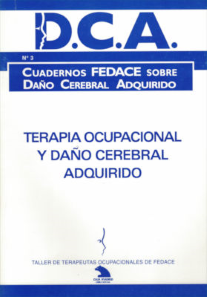
Terapia ocupacional y daño cerebral adquirido (Cuadernos sobre Daño Cerebral Adquirido nº 3)
Información documento
Tipo:
Número:
Catalogación:
- Monografías
Autor:
Federación Española de Daño Cerebral (FEDACE). Actualmente Daño Cerebral Estatal.
Idioma:
Fecha de Publicación:
Editorial:
Federación Española de Daño Cerebral (FEDACE). Actualmente Daño Cerebral Estatal.
Número de páginas:
Documentos:
ISBN:
Descriptores:
- Daño cerebral adquirido
- Ictus
- Terapia ocupacional
- Traumatismo craneoencefálico
Resumen:
Cuadernos sobre Daño Cerebral Adquirido nº 3
Esta guía nace con el objeto de plasmar el conocimiento que los profesionales de la terapia ocupacional de las asociaciones y de la federación poseen respecto a los aspectos teóricos más fundamentales de la intervención desde la Terapia Ocupacional en personas afectadas por Daño Cerebral Adquirido.
PARTE 1: Terapia Ocupacional y Daño Cerebral Adquirido.
- ¿Qué es el Daño Cerebral Adquirido?
- ¿Qué es la Terapia Ocupacional?
- Componentes de ejecución ocupacional.
- Actividades de la vida diaria (AVDs).
- Repercusión clínica del Daño Cerebral Adquirido en las Actividades de la vida diaria.
- ¿Quién es el Terapeuta ocupacional? Funciones.
- Acerca de algunos campos de actuación de Terapia Ocupacional: las ayudas técnicas, intervención con las familias, intervención domiciliaria, intervención en la comunidad.
PARTE 2: La Terapia ocupacional en las asociaciones de Daño Cerebral Adquirido.
- Las fases de la intervención en personas afectadas por Daño Cerebral Adquirido: rol profesional de Terapia ocupacional en cada fase de intervención y unidades de intervención - recursos asistenciales en cada fase.
- Programas a desarrollar en un servicio de Terapia ocupacional.
- La realidad de la Terapia ocupacional en las asociaciones que conforman FEDACE.
Observaciones:
La Biblioteca del Ceadac dispone de un ejemplar en papel para su consulta.
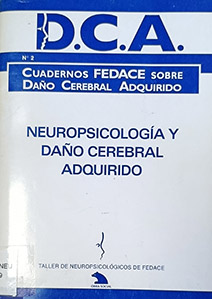
Neuropsicología y daño cerebral adquirido. Taller de neuropsicólogos de FEDACE (Cuadernos sobre Daño Cerebral Adquirido nº 2)
Información documento
Tipo:
Revista:
Número:
Catalogación:
- Monografías
Autor:
Federación Española de Daño Cerebral (FEDACE). Actualmente Daño Cerebral Estatal.
Idioma:
Fecha de Publicación:
Editorial:
FEDACE
Número de páginas:
Documentos:
Descriptores:
- Daño cerebral adquirido
- Neuropsicología
Resumen:
Cuadernos FEDACE sobre daño cerebral adquirido nº 2
- Neuropsicología y daño cerebral.
- La neuropsicología en las Asociaciones de Daño Cerebral.
- Anexos.
Las siguientes páginas son el primer paso que se da como grupo de trabajo. Los objetivos planteados inicialmente para este primer encuentro son:
- Unificar criterios de trabajo, diagnóstico e intervención favoreciendo la unificación del trabajo relacionado con esta disciplina, especialmente en las Asociaciones de Daño Cerebral.
- Fomentar el conocimiento de la neuropsicología entre los profesionales de esta área y de otras disciplinas afines.
- Aunar esfuerzos y experiencia entre todo el grupo de neuropsicólogos que trabajan para las asociaciones que componen FEDACE.
- Orientar a otros profesionales interesados en este campo de trabajo.
Observaciones:
La Biblioteca del Ceadac dispone de un ejemplar físico para su consulta.
Manual of Nerve Conduction Study and Surface Anatomy for Needle Electromyography
Información documento
Tipo:
Catalogación:
- Monografías
Autor:
Hang J. Lee, Joel A. DeLisa
Idioma:
Fecha de Publicación:
Editorial:
Lippincott, Williams and Wilkins. Fourth edition.
Número de páginas:
ISBN:
Descriptores:
- Neurorrehabilitación
Resumen:
PART 1: NERVE CONDUCTION STUDY
-- pt. 1. Introduction -- pt. 1.1. Basic: nerve conduction studies: general informaiton -- pt. 1.2. Techniques: general considerations -- pt. 1.3. Technical procedures -- pt. 1.4. Troubleshooting -- pt. 1.5. Temperature effects of nerve conduction velocities and latencies -- pt. 1.6. Other variability in nerve conduction velocities and common sources of error.
-- pt. 2. Cranial nerves -- pt. 2.1. Facial nerve -- pt. 2.2. Trigeminal nerve (ophtalmic nerve) conduction study
-- pt. 3. Upper extremity -- pt. 3.1. Median nerve -- pt. 3.2. Ulnar nerve -- pt. 3.3. Radial nerve -- pt. 3.4. H reflex of the flexor carpi radialis -- pt. 3.5. Palmar unilateral digital branch of median and ulnar nerve conduction studies
-- pt. 4. Lower extremity -- pt. 4.1. Common peroneal nerve -- pt. 4.2. Tibial nerve -- pt. 4.3. Sural nerve -- p. 4.4. Femoral nerve motor conduction studies -- pt. 4.5. Lateral femoral cutaneous nerve conduction studies -- pt. 4.6. Posterior femoral cutaneous nerve conduction studies -- pt. 4.7. Medial femoral cutaneous nerve conduction studies -- pt. 4.8. Saphenous nerve conduction studies -- pt. 4.9. Dorsal nerve of the penis -- pt. 4.10. L5 and S1 spinal root stimulations -- pt. 4.11. Motor conduction studies across the sacral plexus -- pt. 4.12. Sciatic motor nerve conduction study -- pt. 4.13. Bulbocavernosus reflex - pudental nerve.
-- pt. 5. Proximal nerve conduciton studies in upper extremity and cervical plexus -- pt. 5.1. Surface anatomy and brachial plexus stimulation at Erb's point -- pt. 5.2. Axillary nerve conduction to the deltoid -- pt. 5.3. Musculocutaneous nerve conduction to the biceps brachii -- pt. 5.4. Suprascapular nerve to the supraspinatus and infraspinatus muscles -- pt. 5.5. Dorsal scapular nerve to the rhomboid muscle -- pt. 5.6. Long thoracic nerve to the serratus anterior -- pt. 5.7. Thoracodorsal nerve to the latissimus dorsi -- pt. 5.8. Phrenic nerve conduction studies to the diaphragm -- pt. 5.9. Greater auricular sensory nerve -- pt. 5.10. Spinal Accessory nerve to the trapezius muscle -- pt. 5.11. Supraclavicular sensory nerve conduction
-- pt. 6. Short-segment incremental study.
-- pt. 7. Reflex and long latency -- pt. 7.1. Blink responses -- pt. 7.2. H Reflex latency to the gastrocnemius -- pt. 7.3. F wave in the upper extremity -- pt. 7.4. Characteristics of F wave versus H wave and M wave -- pt. 7.5. F wave in the lower extremity -- pt. 7.6. Sympathetic skin response.
-- pt. 8. Motor nerve conduction studies in premature infants, infants and children
-- pt. 9. Repetitive stimulation (neuromuscular junction)
PART 2: SURFACE ANATOMY FOR NEEDLE ELECTROMYOGRAPHY
-- pt. 10. Introduction of needle electromyography
-- pt. 11. The hand -- pt. 11.1. Abductor pollicis brevis -- pt. 11.2. Opponens pollicis -- pt. 11.3. Flexor pollicis brevis - Superficial and deep head -- pt. 11.4. Lumbricals / Firs lumbrical -- pt. 11.5. First dorsal interosseous -- pt. 11.6. Adductor pollicis -- pt. 11.7. Second palmar interosseous -- pt. 11.8. Abductor digiti minimi -- pt. 11.9. Flexor digiti minimi brevis -- pt. 11.10. Opponens digiti minimi
-- pt. 12. The forearm -- pt. 12.1. Pronator teres, Flexor carpi radialis, Palmaris longus, Flexor digitorum superficialis (sublimis). Flexor pollicis longus, Pronator quadratus, Flexor carpi ulnaris, Flexor digitorum produndus, Brachioradialis, Extensor carpi radialis longus and brevis, Extensor carpi ulnaris, Extensor digitorum communis, Extensor indicis propius, Extensor pollicis longus, Supinator.
-- pt. 13. The arm -- pt. 13.1. Biceps brachii, Brachialis, Coracobrachialis, Triceps, Anconeus, Deltoid.
-- pt. 14. The shoulder -- pt. 14.1. Supraspinatus, Infraspinatus, Teres major, Teres minor, Rhomboid major, Rhomboid minor, Pectoralis major, Trapezius, Latissimus dorsi, Serratus anterior.
-- pt. 15. The foot -- pt. 15.1. Abductor hallucis, flexor hallucis brevis, flexor digitorum brevis, abductor digiti minimi, First dorsal interosseous, Extensor digitorum brevis.
-- pt. 16. The leg -- pt. 16.1. Tibialis anterior, Extensor digitorum longus, Extensor hallucis longus, Peroneus longus, Peroneus brevis, Gastrocnemius, Soleus, Flexor digitorum longus, Tibialis posterior, Flexor hallucis longus.
-- pt. 17. The anterior thigh -- pt. 17.1. Iliopsoas, Pectineus, Rectus femoris, Vastus medialis, Vastus lateralis, Sartorius, Tensor fascia lata, Adductor longus, Gracilis.
-- pt. 18. The buttock and posterior thigh -- pt. 18.1. Gluteus maximus, Gluteus medius, Gluteus minimus, Biceps femoris: long head and short head, Semitendinosus, Semimembranosus.
-- pt. 19. The trunk -- pt. 19.1. Diaphragm, Rectus abdominalis, Lumbosacral and cervical paraspinal muscles / Multifidi
-- pt. 20. The pelvis -- pt. 20.1. External anal sphincter, Bulbocavernosus (bulbospongiosus)
-- pt. 21. The head and neck -- pt. 21.1. Frontalis, Orbicularis oculi, Orbicularis oris, Nasalis, Mentalis, Auricularis posterior, Temporalis, Masseter, Cricothyroid, Sternocleidomastoid, Tongue.
-- pt. 22. Anatomy
Abstract:
Ideal both as a how-to guide for the beginner or as a quick refresher for the experienced clinician. This practical resource details the proper technique and electrode placement for a range of commonly performed nerve conduction studies.
Observaciones:
La Biblioteca del Ceadac dispone de un ejemplar para su consulta.
Tesis doctoral: Development of a hybrid robotic system based on an adaptative and associative assistance for rehabilitation of reaching movement after stroke
Información documento
Tipo:
Catalogación:
- Monografías
Autor:
Francisco Resquín Acosta
Idioma:
Fecha de Publicación:
Editorial:
Número de páginas:
Descriptores:
- Rehabilitación
- Daño cerebral adquirido
- Ictus
Resumen:
pt. 1. Introduction of stroke and rehabilitation of the upper limb motor function -- pt. 2. State of the art of hybrid robotics system for rehabilitation motor function of the upper-extremities -- pt. 3. Implementation of a FES-based adaptative assistance in a hybrid robotic system for rehabilitation of reaching movement after stroke -- pt. 4. Eliciting neural plasticity by the timed association of the user's motor intent with the peripheral hybrid assistance -- pt. 5. Clinical evaluation of the hybrid robotic system with the adaptive and associative assistance in post-stroke patients -- pt. 6. Conclusion and future works
Abstract:
Tesis presentada el 29 de noviembre de 2017 en el Departamento de Ingeniería de Sistemas y Automática de la Universidad Carlos III de Madrid. La tutora fue Dolores Blanco Rojas, y los directores José Luis Pons Rovira y Fernando Brunetti Fernández.
The works presented in this document prove the feasibility of using the hybrid robotic system as a rehabilitative tool with post- stroke subjects. Moreover, it is demostrated the adaptative controller is able to adjust the level of assistance to achieve successful tracking movement with the affected arm.
Observaciones:
La Biblioteca del Ceadac dispone de un ejemplar para su consulta.
Textbook of neural repair and rehabilitation
Información documento
Tipo:
Catalogación:
- Monografías
Autor:
Edited by Michael E. Selzer
Idioma:
Fecha de Publicación:
Editorial:
Cambridge University Press
Número de páginas:
ISBN:
Descriptores:
- Neurorrehabilitación
- Rehabilitación
- Fisioterapia
Resumen:
Volumen 1: Neural repair and plasticity -- pt. 1. Neural plasticity -- pt. 1.1. Cellular and molecular mechanisms of neural plasticity -- pt. 1.2. Functional plasticity in CNS system -- pt. 1.3. Plasticity after injury to the CNS -- pt. 2. Neural repair -- pt. 2.1. Basic cellular and molecular processes -- pt. 2.2. Determinations of regeneration in the injured nervous system -- pt. 2.3. Promotion of regeneration in the injured nervous system -- pt. 2.4. Translational research: application to human neural injury
Volumen 2: Medical Neurorehabilitation -- pt. 1. Technology of neurorehabilitation -- pt. 1.1. Outcomes measurement and diagnostic technology -- 1.2. Therapeutic technology -- pt. 2. Symptom-specific neurorehabilitation -- pt. 2.1. Sensory and motor diysfunctions -- pt. 2.2. Vegetative and autonomic dysfunctions -- pt. 2.3. Cognitive neurorehabilitation -- pt. 3. Disease-specific neurorehabilitation systems
Abstract:
In two freestanding volumes, this work provides comprehensive coverage of the science and practice of neurological rehabilitation.
The first volume, Neural repair and plasticity, covers the basic sciences relevant to recovery of function following injury to the nervous system, reviewing anatomical and physiological plasticity in the normal CNS, mechanisms of neuronal death, axonal regeneration, stem cell biology, and research strategies targeted at axon regeneration and neuron replacement.
The second volume, Medical Neurorehabilitation, can stand alone as a clinical handbook for neurorehabilitation. It covers the practical applications of the basic science principles presented in volume 1, provides authoritative guideles on the management of disabling symptoms, and describes comprehensive rehabilitation approaches for the major categories of disabling neurological disorders.
Observaciones:
La Biblioteca del Ceadac dispone de un ejemplar para su consulta.
Converging Clinical and Engineering Research on Neurorehabilitation II
Información documento
Tipo:
Catalogación:
- Comunicaciones y ponencias
Autor:
Jaime Ibáñez
Idioma:
Fecha de Publicación:
Editorial:
Springer
Evento:
Proceedings of the 3rd International Conference on NeuroRehabilitation (ICNR2016), October 18-21, 2016, Segovia
Número de páginas:
ISBN:
Descriptores:
- Ayudas técnicas
- Congresos
- Neurorrehabilitación
- Rehabilitación
- Tecnologías en rehabilitación
Resumen:
VOLUMEN 1: pt. 1. Characterization and Modulation Of Neurophysiological Signals: New Approaches For Targeted Neuromodulation Of The Motor Nervous System (I) -- pt. 2. Characterization and Modulation of Neurophysiological Signals: New Approaches for Targeted Neuromodulation of the Motor Nervous System (II) -- pt. 3. Characterization and Modulation of Neurophysiological Signals: Operant Conditioning of Spinal Reflexes: From Basic Science to Functional Changes in Health and Disease -- pt. 4. Characterization and Modulation of Neurophysiological Signals: Experimental Approaches to Restore Loss of Function – pt. 5. Characterization and Modulation of Neurophysiological Signals: Sensory Restoration and Adaptive Neural Interfaces -- pt. 6. Characterization and Modulation of Neurophysiological Signals: Investigating Neural Control Strategies of Movement with EMG Signals -- pt. 7. Characterization and Modulation of Neurophysiological Signals: Investigation of the Human Neuromuscular System Using Human Reflexes: Past, Present and the Future -- pt. 8. Empowering and Quantifying Neurorehabilitation: Biomechanics and Movement Analysis in Rehabilitation (I) -- pt. 9. Empowering and Quantifying Neurorehabilitation: Biomechanics and Movement Analysis in Rehabilitation (II) -- pt. 10. Empowering and Quantifying Neurorehabilitation: Advances in Understanding Human Movement and Motor Interactions (I) -- pt. 11. Empowering and Quantifying Neurorehabilitation: Advances in Understanding Human Movement and Motor Interactions (II) -- pt. 12. Empowering and Quantifying Neurorehabilitation: Clinical Needs and Prospects of Neurorehabilitation Technology in Stroke -- pt. 13. Empowering and Quantifying Neurorehabilitation: Clinical Needs and Prospects of Neurorehabilitation Technology in SCI -- pt. 14. Empowering and Quantifying Neurorehabilitation: Interpersonal Rehabilitation Games –- pt. 15. Empowering and Quantifying Neurorehabilitation: Gaming and Rehabilitation -- pt.16. Empowering and Quantifying Neurorehabilitation: Experimental Approaches for Restoring Hand Function -- pt. 17. Rehabilitation Robotics and Neuroprosthetics: Wearable Human-Robot Interfaces for Upper Limb Functional Recovering -- pt. 18. Rehabilitation Robotics and Neuroprosthetics: Soft Wearable Robotics: Potential for Neurorehabilitation -- pt. 19. Rehabilitation Robotics and Neuroprosthetics: Next Generation Bionics -- pt. 20. Rehabilitation Robotics and Neuroprosthetics: Advances in Limb Prosthetics -- pt. 21. Rehabilitation Robotics and Neuroprosthetics: Neuromechanical Modeling for Wearable Assistive Technologies -- pt. 22. Rehabilitation Robotics and Neuroprosthetics: Motor Neuroprosthetics -- pt. 23. Rehabilitation Robotics and Neuroprosthetics: FES and Wearable Robot Systems in Rehabilitation and Assistance of Locomotion -- pt. 24. Rehabilitation Robotics and Neuroprosthetics: Novel Technologies and Natural Sensory Feedback for Phantom Limb Pain Modulation and Therapy.
VOLUMEN 2: pt. 25. Biological Signal Analysis: Neural Signal Processing of the Pathological Brain -- pt. 26. Biological Signal Analysis: Data Mining and Physiological Signal -- pt. 27. Biological Signal Analysis: Human Gait Simulation for Exoskeleton Design and Patient Adaptation -- pt. 28. Biological Signal Analysis: BCI Driven Approaches for Motor-Cognitive Rehabilitation After Stroke -- pt. 29. Biological Signal Analysis: Indirect Measures of Brain Activity: A Window into the Mind -- pt. 30. Biological Signal Analysis: Feedback Systems for Rehabilitation and Assistance -- pt. 31. Biological Signal Analysis: Role of Input Synergies for Rehabilitation -- pt. 32. Biological Signal Analysis: Modular Control in Healthy and Pathologic Subjects -- pt. 33. Biological Signal Analysis: Muscle Synergies: Towards Clinically Oriented Applications -- pt. 34. Posters -- pt. 35. Workshops -- pt. 36. AITADIS Workshops.
Abstract:
The book reports on advanced topics in the areas of neurorehabilitation research and practice. It focuses on new methods for interfacing the human nervous system with electronic and mechatronic systems to restore or compensate impaired neural functions. Importantly, the book merges different perspectives, such as the clinical, neurophysiological, and bioengineering ones, to promote, feed and encourage collaborations between clinicians, neuroscientists and engineers. Based on the 2016 International Conference on Neurorehabilitation (ICNR 2016) held on October 18-21, 2016, in Segovia, Spain, this book covers various aspects of neurorehabilitation research and practice, including new insights into biomechanics, brain physiology, neuroplasticity, and brain damages and diseases, as well as innovative methods and technologies for studying and/or recovering brain function, from data mining to interface technologies and neuroprosthetics. In this way, it offers a concise, yet comprehensive reference guide to neurosurgeons, rehabilitation physicians, neurologists, and bioengineers. Moreover, by highlighting current challenges in understanding brain diseases as well as in the available technologies and their implementation, the book is also expected to foster new collaborations between the different groups, thus stimulating new ideas and research directions.
Observaciones:
La Biblioteca del Ceadac dispone de un ejemplar para su consulta.
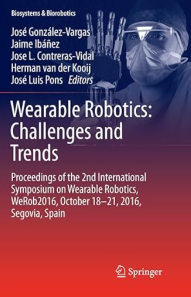
Wearable Robotics: Challenges and Trends: Proceedings of the 2nd International Symposium on Wearable Robotics, WeRob2016, October 18-21, 2016, Segovia, Spain
Información documento
Tipo:
Catalogación:
- Comunicaciones y ponencias
Autor:
José González-Vargas
Idioma:
Fecha de Publicación:
Editorial:
Número de páginas:
ISBN:
Descriptores:
- Tecnologías en rehabilitación
Resumen:
PARTE 1: CLINICAL FOCUS ON REHABILITATION AND ASSISTIVE WRs – pt. 1. Clinical Evaluation of a Socket-Ready Naturally Controlled Multichannel Upper Limb Prosthetic System – pt. 2. Evaluation of a Robotic Exoskeleton for Gait Training in Acute Stroke: A Case Study – pt. 3. Wearable Exoskeleton Assisted Rehabilitation in Multiple Sclerosis: Feasibility and Experience – pt. 4. Exoskeletons for Rehabilitation and Personal Mobility: Creating Clinical Evidence – pt. 5. Lower Limb Wearable Systems for Mobility and Rehabilitation Challenges: Clinical Focus.
PARTE 2: EMERGING TECHNOLOGIES IN WRs – pt. 6. Impedance Control of Series Elastic Actuators Using Acceleration Feedback – pt. 7. Kinetic Energy Recovery in Human Joints: The Flywheel-Infinitely Variable Transmission Actuator – pt. 8. A Compliant Lightweight and Adaptable Active Ankle Foot Orthosis for Robotic Rehabilitation – pt. 9. A Novel Shoulder Mechanism with a Double Parallelogram Linkage for Upper-Body Exoskeletons – pt. 10. A Soft Robotic Extra-Finger and Arm Support to Recover Grasp Capabilities in Chronic Stroke Patients – pt. 11. A Quasi-Passive Knee Exoskeleton to Assist During Descent – pt. 12. Wearable Sensory Apparatus for Multi-segment System Orientation Estimation with Long-Term Drift and Magnetic Disturbance Compensation – pt. 13. A Portable Active Pelvis Orthosis for Ambulatory Movement Assistance.
PARTE 3: SOFT WEARABLE ROBOTICS – pt. 14. XoSoft – a visión for a soft modular lower limb exoskeleton – pt. 15. On the Efficacy of Isolating Shoulder and Elbow Movements with a Soft, Portable, and Wearable Robotic Device – pt. 16. Design Improvement of a Polymer-Based Tendon-Driven Wearable Robotic Hand (Exo-Glove Poly) – pt. 17. Affective Touch and Low Power Artificial Muscles for Rehabilitative and Assistive Wearable Soft Robotics – pt. 18. Evaluation of Force Tracking Controller with Soft Exosuit for Hip Extension Assistance.
PARTE 4: NEURAL INTERFACING OF WRs – pt. 19. Endogenous Control of Powered Lower-Limb Exoskeleton – pt. 20. Natural User-Controlled Ambulation of Lower Extremity Exoskeletons for Individuals with Spinal Cord Injury – pt. 21. Real-Time Modeling for Lower Limb Exoskeletons – pt. 22. Towards Everyday Shared Control of Lower Limb Exoskeletons.
PARTE 5: BIOMECHANICS AND NEUROPHYSIOLOGICAL STUDIES WITH WRs – pt. 23. Joint-Level Responses to Counteract Perturbations Scale with Perturbation Magnitude and Direction – pt. 24. Metabolic Energy Consumption in a Box-Lifting Task: A Parametric Study on the Assistive Torque – pt. 25 Analysis of the Movement Variability in Dance Activities Using Wearable Sensors.
PARTE 6: NEW DEVELOPMENTS IN WEARABLE REHABILITATION ROBOTICS – pt. 26. Real Time Computation of Centroidal Momentum for the Use as a Stability Index Applicable to Human Walking with Exoskeleton – pt. 27. A Versatile Neuromuscular Exoskeleton Controller for Gait Assistance: A Preliminary Study on Spinal Cord Injury Patients – pt. 28. Introducing a Modular, Personalized Exoskeleton for Ankle and Knee Support of Individuals with a Spinal Cord Injury – pt. 29. Towards Exoskeletons with Balance Capacities – pt. 30. EMG-Based Detection of User’s Intentions for Human-Machine Shared Control of an Assistive Upper-Limb Exoskeleton.
PARTE 7: LEGAL FRAMEWORK, STANDARDIZATION AND ETHICAL ISSUES IN WEARABLES – pt. 31. Safety Standardization of Wearable Robots—The Need for Testing Methods – pt. 32. The Potential and Acceptance of Exoskeletons in Industry – pt. 33. Wearable Robots: A Legal Analysis – pt. 34. A Verification Method for Testing Abrasion in the Use of Restraint Type Personal Care Robots.
PARTE 8: BENCHMARKING IN WRS AND RELATED COMMUNITIES – pt. 35. Kinematic Comparison of Gait Rehabilitation with Exoskeleton and End-Effector Devices – pt. 36. Evaluating the Gait of Lower Limb Prosthesis Users – pt. 37. Some Considerations on Benchmarking of Wearable Robots for Mobility – pt. 38. Benchmarking Data for Human Walking in Different Scenarios – pt. 39. Clinical Gait Assessment in Relation to Benchmarking Robot Locomotion.
PARTE 9: SYMBIOTIC CONTROL OF WRS – pt. 40. Attention Level Measurement During Exoskeleton Rehabilitation Through a BMI System – pt. 41. Detection of Subject’s Intention to Trigger Transitions Between Sit, Stand and Walk with a Lower Limb Exoskeleton – pt. 42. The New Generation of Compliant Actuators for Use in Controllable Bio-Inspired Wearable Robots – pt. 43. An EMG-informed Model to Evaluate Assistance of the Biomot Compliant Ankle Actuator – pt. 44. Tacit Adaptability of a Mechanically Adjustable Compliance and Controllable Equilibrium Position Actuator, a Preliminary Study.
PARTE 10: EMERGING APPLICATIONS DOMAINS OF WRS, EMERGING TECHNOLOGIES IN WRS – pt. 45. Design and Kinematic Analysis of the Hanyang Exoskeleton Assistive Robot (HEXAR) for Human Synchronized Motion – pt. 46. Design and Experimental Evaluation of a Low-Cost Robotic Orthosis for Gait Assistance in Subjects with Spinal Cord Injury – pt. 47. A Powered Low-Back Exoskeleton for Industrial Handling: Considerations on Controls – pt. 48. Efficient Lower Limb Exoskeleton for Human Motion Assistance – pt. 49. Active Safety Functions for Industrial Lower Body Exoskeletons: Concept and Assessment – pt. 50. SOLEUS: Ankle Foot Orthosis for Space Countermeasure with Immersive Virtual Reality – pt. 51. SPEXOR: Spinal Exoskeletal Robot for Low Back Pain Prevention and Vocational Reintegration.
PARTE 11: POSTERS – pt. 52. HeSA, Hip Exoskeleton for Superior Assistance – pt. 53. SPEXOR: Towards a Passive Spinal Exoskeleton – pt. 54. Autonomous Soft Exosuit for Hip Extension Assistance – pt. 55. Comparison of Ankle Moment Inspired and Ankle Positive Power Inspired Controllers for a Multi-Articular Soft Exosuit for Walking Assistance – pt. 56. Biomechanical Analysis and Inertial Sensing of Ankle Joint While Stepping on an Unanticipated Bump – pt. 57. A Novel Approach to Increase Upper Extremity Active Range of Motion for Individuals with Duchenne Muscular Dystrophy Using Admittance Control: A Preliminary Study – pt. 58. Modulation of Knee Range of Motion and Time to Rest in Cerebral Palsy Using Two Forms of Mechanical Stimulation – pt. 59. Training Response to Longitudinal Powered Exoskeleton Training for SCI – pt. 60. Adaptive Classification of Arbitrary Activities Through Hidden Markov Modeling with Automated Optimal Initialization – pt. 61. Design and Motion Analysis of a Wearable and Portable Hand Exoskeleton – pt. 62. Nitiglove: Nitinol-Driven Robotic Glove Used to Assist Therapy for Hand Mobility Recovery – pt. 63. 3D Printed Arm Exoskeleton for Teleoperation and Manipulation Applications – pt. 64. Musculoskeletal Simulation of SOLEUS Ankle Exoskeleton for Countermeasure Exercise in Space – pt. 65. Human Gait Feature Detection Using Inertial Sensors Wavelets – pt. 66. On the Importance of a Motor Model for the Optimization of SEA-driven Prosthetic Ankles – pt. 67. Assessment of a 7-DOF Hand Exoskeleton for Neurorehabilitation – pt. 68. Improving the Standing Balance of People with Spinal Cord Injury Through the Use of a Powered Ankle-Foot Orthosis – pt. 69. Transparent Mode for Lower Limb Exoskeleton – pt. 70. Human-Robot Mutual Force Borrowing and Seamless Leader-Follower Role Switching by Learning and Coordination of Interactive Impedance – pt. 71. Upper Limb Exoskeleton Control for Isotropic Sensitivity of Human Arm – pt. 72. AUTONOMYO: Design Challenges of Lower Limb Assistive Device for Elderly People, Multiple Sclerosis and Neuromuscular Diseases – pt. 73. Passive Lower Back Moment Support in a Wearable Lifting Aid: Counterweight Versus Springs.
Abstract:
The book reports on advanced topics in the areas of wearable robotics research and practice. It focuses on new technologies, including neural interfaces, soft wearable robots, sensors and actuators technologies, and discusses important regulatory challenges, as well as clinical and ethical issues. Based on the 2nd International Symposium on Wearable Robotics, WeRob2016, held October 18-21, 2016, in Segovia, Spain, the book addresses a large audience of academics and professionals working in government, industry, and medical centers, and end-users alike. It provides them with specialized information and with a source of inspiration for new ideas and collaborations. It discusses exemplary case studies highlighting practical challenges related to the implementation of wearable robots in a number of fields. One of the focus is on clinical applications, which was encouraged by the colocation of WeRob2016 with the International Conference on Neurorehabilitation, INCR2016. Additional topics include space applications and assistive technologies in the industry. The book merges together the engineering, medical, ethical and political perspectives, thus offering a multidisciplinary, timely snapshot of the field of wearable technologies.
Observaciones:
La Biblioteca del Ceadac dispone de un ejemplar para su consulta.
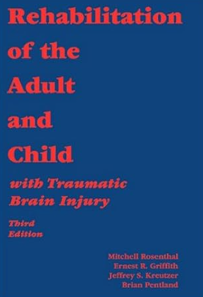
Rehabilitation of the adult and child with traumatic brain injury
Información documento
Tipo:
Catalogación:
- Monografías
Autor:
Idioma:
Fecha de Publicación:
Editorial:
Número de páginas:
ISBN:
Descriptores:
- Traumatismo craneoencefálico
- Familias
- Neurología
- Daño cerebral adquirido
Resumen:
-- PARTE 1: ACUTE ASPECTS OF BRAIN INJURY -- pt. 1. Incidence and prevalence of, and costs associated with, TBI -- pt. 2. Pathophysiological aspects of injury and mechanisms of recovery -- pt. 3. Acute management of brain injury -- pt. 4. Medical and orthopedic complications -- pt. 5. Cognitive and behavioral effects of brain injury
-- PARTE 2: SPECIALIZED ASSESSMENT TECHNIQUES -- pt. 6. Neurological and Nueroradiological evaluation -- pt. 7. Physiatric assessment in TBI -- pt. 8. Functional assessment in TBI -- pt. 9. Neurophychological examination of the patient with TBI -- pt. 10. Emotional, behavioral, and personality assessment after TBI -- pt. 11. Evaluation of communication and swallowing disorders -- pt. 12. A holistic approach to family assessment after BI.
-- PARTE 3: TREATMENT APPROACHES -- pt. 13. Strategies to enhance mobility in TBI patients -- pt. 14. Activities of daily living -- pt. 15. Cognitive rehabilitation -- pt. 16. Psychotherapy and psychotherapeutic interventions in BI rehabilitation -- pt. 17. Treatment approaches for communication disorders -- pt. 16. Behavior analysis and BI rehabilitation -- pt. 19. Community integration and quality of life of individuals with TBI -- pt. 20. Vocational rehabilitation for individuals with TBI.
-- PARTE 4: REHABILITATION OF THE CHILD WITH TBI -- pt. 21. Specific problems associated with pediatric BI -- pt. 22. TBI in children and adolescents: assessment and rehabilitation -- pt. 23. Managing transitions for education
-- PARTE 5: SPECIAL TOPICS -- pt. 24. Ethical dimensions of severe TBI -- pt. 25. Assessment and treatment of the vegetative and minimally conscious patient -- pt. 26. The older adult with TBI -- pt. 27. Mild head injury: current research and clinical issues -- pt. 28. Sexuality and sexual dysfunction -- pt. 29. Limbs with restricted or excessive motion and TBI -- pt. 30. Pharmacology in TBI: Fundamentals and treatment strategies -- pt. 31. Substance abuse and BI -- pt. 32. Therapeutic recreation -- pt. 33. Case management and life care planning in BI rehabilitation
Abstract:
The book intends to present a reasonably up-to-date discussion of issues that are of greatest relevance to the practitioner, whether student, novice, or expert.
Observaciones:
La Biblioteca del Ceadac dispone de un ejemplar para su consulta.
Harrison's principles of internal medicine
Información documento
Tipo:
Catalogación:
- Monografías
Autor:
Jean D. Wilson
Idioma:
Fecha de Publicación:
Editorial:
Descriptores:
- Neurología
Resumen:
pt. 1. The biological basis of disease -- pt. 2. Cardinal manifestations of disease -- pt. 3. Clinical pharmacology -- pt. 4. Nutrition -- pt. 5. Infectious diseases -- pt. 6. Disorders of the cardiovascular system -- pt. 7. Disorders of the respiratory systema -- pt. 8. Disorders of the kidney and urinary tract -- pt. 9. Disorders of the gastrointestinal system -- pt. 10. Disorders of the immune system, connective tissue, and joints -- pt. 11. Hematology and oncology -- pt. 12. Endocrinology and metabolism -- pt. 13. Neurologic disorders -- pt. 14. Psychiatry -- pt. 15. Environmental and occupational hazards
Observaciones:
La Biblioteca del Ceadac dispone de un ejemplar para su consulta.

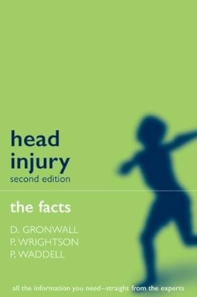
Head Injury: the facts. A guide for families and care-givers
Información documento
Tipo:
Catalogación:
- Monografías
Autor:
Idioma:
Fecha de Publicación:
Editorial:
Número de páginas:
ISBN:
Descriptores:
- Accidentes
- Cuidadores
- Daño cerebral adquirido
- Familias
- Guía didáctica
- Ictus
- Rehabilitación
- Sesiones para familias
- Traumatismo craneoencefálico
Resumen:
pt. 1. Introduction -- pt. 2. What happens in a head injury? -- pt. 3. In hospital -- pt. 4. Leaving hospital - what happens now? --pt. 5. The continuing effects of head injury -- pt. 6. Some specific consequences -- pt. 7. Needs of particular groups -- pt. 8. How long will it take for the patient to recover? -- pt. 9. Back to work and study -- pt. 10. Long-term adjustment -- pt. 11. Providing a head-injury service -- pt. 12. Suggestions for further reading
Abstract:
In many countries, after-care of the victim is often inadequate, and frequently families are left to manage as best as they can.
The book is written for families who find themselves in such situations. Beginning with the injury itself, the stages that the patient will go through and the procedures and techniques that will be used to chart progress are explained. There are suggestions on managing the return to work and school and, for those who will never reach this level, the long-term adjustments that they and their care-givers need to make are described.
Observaciones:
La Biblioteca del Ceadac dispone de un ejemplar para su consulta.
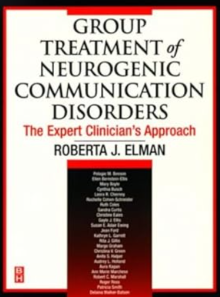
Group treatment of neurogenic communication disorders: the expert clinician's approach
Información documento
Tipo:
Catalogación:
- Monografías
Autor:
Idioma:
Fecha de Publicación:
Editorial:
Número de páginas:
ISBN:
Descriptores:
- Afasia
- Daño cerebral adquirido
- Ictus
- Logopedia
- Trastornos de la comunicación
Resumen:
SECTION I: GROUP TREATMENT - FUNDAMENTAL AND PROFESSIONAL CONSIDERATIONS -- pt. 1. Introduction to group treatment of neurogenic communication disorders -- pt. 2. Group process, group dynamics, and group techniques with neurogenic communication disorders -- pt. 3. Measuring outcomes of group therapy -- pt. 4. Group treatment reimbursement issues
SECTION II: APHASIA -- Part One: Speech-Language Pathologist-Facilitated Groups -- pt. 5. Aphasia Group Therapy in a Subacute Settings: using the Amercian Speech-Language-Hearing Association Functional Assessment of Communication Skills -- pt. 6. Aphasia Group Communication Treatment: The Aphasia Center of California Aproach -- pt. 7. A problem-focused group treatment program for clients with Mild Aphasia -- Part 2: University and Student-Facilitated Groups -- pt. 8. An alternative model for the treatment of aphasia: the LifeLink Approach -- pt. 9. Aphasia Groups: The Arizona Experience -- pt. 10. Group Communication Therapy for People with Long-Term Aphasia: Scaffolded Thematic Discourse Activities -- Part Three: Volunteer-Facilitated Groups -- pt. 11. Groups in the Introductory Program at the Pat Arato Aphasia Centre -- pt. 12. The Aphasia Self-Help Movement in Britain: a Challenge and and Opportunity -- pt. 13. The Power of Ahasia Groups.
SECTION III: RIGHT HEMISPHERE DAMAGE -- pt. 14. Group Treatment for Patients with Right Hemisphere Damage.
SECTION IV: TRAUMATIC BRAIN INJURY -- pt. 15. Traumatic Brain Injury: Cognitive-Communicative Needs and Early Intervention -- pt. 16. Cotreatment and Community-Oriented Group Treatment
SECTION V: MOTOR SPEECH DISORDERS -- pt. 17. Group Therapy for Dysarthria
Abstract:
This book can be used in classes and clinical practica for advanced undergraduates and graduate students in speech-language pathology. Clinicians who are interested in group treatment should find the information practical and easily applicable to a wide range of clients and settings. The information in this book should also prove of value to students and professionals in other health-related disciplines.
Observaciones:
La Biblioteca del Ceadac dispone de un ejemplar para su consulta.
Therapy guide spasticity - dystonia
Información documento
Tipo:
Catalogación:
- Monografías
Autor:
Gerhard Reichel
Idioma:
Fecha de Publicación:
Editorial:
Número de páginas:
ISBN:
Descriptores:
- Rehabilitación
- Alteraciones psicomotrices
- Discapacidad física
- Trastornos del movimiento
Resumen:
pt. 1. Spasticity -- pt. 2. Dystonia -- pt. 3.1. Instructions for treatment with Botulinum Toxin -- pt. 3.2. Cervical Dystonia -- pt. 3.3. Spasticity Rating Scales -- pt. 3.4. Scheme for the Analysis of Extrapyramidal Disorders -- pt. 3.5. Muscles of Extremities -- pt. 3.6. Identification of Muscles
Abstract:
This book is an attempt to summarise the contemporary state of treatment of spasticity and dystonia. The author included facts which have been scientifically validated, but also included some unproven approaches if no satisfactory alternative treatment exists. Since the introduction of Btx in the therapy of spasticity in 1989 the positive effects of this therapy have been proven in countless studies of children and adults with spasticity caused by cerebral palsy, multiple sclerosis, cerebral ischemia, cerebral and spinal trauma, as well as neuro-degenerative diseases.
Observaciones:
La Biblioteca del Ceadac dispone de un ejemplar para su consulta.
Principles of neuropsychological rehabilitation
Información documento
Tipo:
Catalogación:
- Monografías
Autor:
George P. Prigatano
Idioma:
Fecha de Publicación:
Editorial:
Oxford University Press
Número de páginas:
ISBN:
Descriptores:
- Neuropsicología
- Rehabilitación
- Daño cerebral adquirido
Resumen:
PARTE 1: HISTORICAL AND CLINICAL PERSPECTIVES -- pt. 1. Introduction to the principles in the context of a brief historical perspective -- pt. 2. The patient's experience and the nature of higher cerebral functions -- pt. 3. The symptom picture and the neglected problem of premorbid cognitive personality factors
PARTE 2: THE PROCESS AND OUTCOME OF NEUROPSYCHOLOGICAL REHABILITATION -- pt. 4. Statement of the problem: Why is neuropsychological rehabilitation needed? -- pt. 5. Cognitive disturbances encountered in neuropsychological rehabilitation -- pt. 6. Personality disturbances and brain damage: theoretical perspectives -- pt. 7. Personality disturbances and brain damage: practical considerations -- pt. 8. Neuropsychological rehabilitation for cognitive and personality disorders after brain injury -- pt. 9. Psychotherapeutic intervention with patients and family members -- pt. 10. Working with interdisciplinary rehabilitation teams -- pt. 11. The outcome of neuropsychological rehabilitation programs that incorporate cognitive rehabilitation and psychotherapeutic intervention
PARTE 3: THEORETICAL AND EMPIRICAL ISSUES -- pt. 12. Disorders of self-awareness after brain injury -- pt. 13. Recovery and deterioration after brain injury -- 14. Science and symbolism in neuropsychological rehabilitation
Abstract:
By closely observing the patient's behavior, the clinician can teach him or her about the direct and indirect effects of brain damage.
The book provides guidelines both for the remediation of higher cerebral disturbances and the management of patients interpersonal problems.
It presents a new perspective on disorders of self-awareness and recovery as well as deterioration phenomena after brain injury.
It will be an invaluable resource for psychologists, neurologists, and psychiatrists involved in neuropsychological rehabilitation.
Observaciones:
La Biblioteca del Ceadac dispone de un ejemplar para su consulta.
Manual de Práctica Clínica en Cefaleas: Recomendaciones diagnóstico-terapéuticas de la SEN 2026
Información documento
Tipo:
Catalogación:
- Guías y documentos técnicos
- Monografías
Autor:
Grupo de estudio de cefaleas de la Sociedad Española de Neurología (SEN).
Coordinadores:
- Dr. Robert Belvís Nieto, Hospital de la Santa Creu i Sant Pau. Barcelona.
- Dr. Pablo Irimia Sieira, Clínica Universidad de Navarra. Pamplona.
Idioma:
Fecha de Publicación:
Editorial:
Ediciones SEN
Fecha de presentación:
Número de páginas:
Documentos:
ISBN:
Depósito Legal:
Descriptores:
- Enfermedades neurológicas
- Investigación
- Neurología
Resumen:
Las cefaleas siguen siendo uno de los motivos de consulta neurológica más frecuentes, y representan un importante reto asistencial y social, con un impacto significativo en la calidad de vida de los pacientes. Este manual es fruto de un trabajo colaborativo ejemplar, en el que han participado numerosos especialistas de todo el país, tanto neurólogos con amplia experiencia como una nueva generación de jóvenes clínicos e investigadores. Esta integración intergeneracional refleja el dinamismo y la renovación que caracterizan actualmente a la SEN.
La presente edición se consolida como una obra de referencia para el abordaje diagnóstico y terapéutico de las cefaleas, con recomendaciones basadas en la mejor evidencia científica disponible. Se actualizan en profundidad los capítulos dedicados a los tratamientos preventivos y sintomáticos, incorporando los avances más recientes en terapias biológicas, anticuerpos monoclonales y moduladores del CGRP (Péptido Relacionado con el Gen de la Calcitonina), así como nuevas estrategias no farmacológicas y herramientas digitales aplicadas al seguimiento y manejo de los pacientes. No solo mantiene el espíritu científico y la búsqueda de la excelencia de las ediciones previas, sino que hace propuestas terapéuticas basadas en el conocimiento actual y buscando mejorar la atención a los pacientes con cefalea y, por lo tanto, su calidad de vida.
Está totalmente alineado con los conocimientos actuales y refuerza su vertiente más práctica. También se amplía el contenido relativo a las técnicas intervencionistas, incluyendo los bloqueos y otras alternativas terapéuticas en cefaleas y algias faciales, reforzando el papel activo del neurólogo en estos procedimientos.
Dirigido a todos los profesionales implicados en la atención de personas con cefaleas y neuralgias craneofaciales. No se trata, por tanto, de un manual exclusivamente para neurólogos, sino de una herramienta pensada también para especialistas en pediatría, medicina de familia, urgencias, enfermería, farmacia o neurocirugía.
Oasis en el daño cerebral. Ictus, vive con lo que te queda.
Información documento
Tipo:
Catalogación:
- Monografías
Autor:
Idioma:
Fecha de Publicación:
Editorial:
Número de páginas:
ISBN:
Depósito Legal:
Descriptores:
- Ictus
- Daño cerebral adquirido
- Testimonio
Resumen:
El libro narra la experiencia personal del autor, quien tras sufrir un ictus masivo, describe su proceso de reconstrucción física y mental. El autor introduce el concepto del "Yo 2.0" para definir su nueva identidad: una versión de sí mismo adaptada a las secuelas (físicas, cognitivas y emocionales) y con una escala de prioridades renovada.
No es un manual de autoayuda convencional, sino un relato honesto y directo sobre la aceptación de la discapacidad, la importancia del apoyo familiar y la decisión de dejar de posponer proyectos para vivir el presente.
Observaciones:
La Biblioteca del Ceadac dispone de un ejemplar para su consulta.
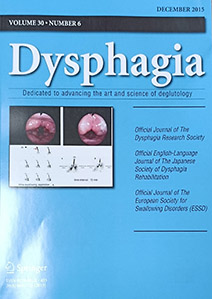
Dysphagia Volume 30 Number 6 (December 2015)
Información documento
Tipo:
Revista:
Volumen:
Número:
Catalogación:
- Publicaciones periódicas
Autor:
Varios autores
Idioma:
Fecha de Publicación:
Editorial:
Springer
Fecha de presentación:
Número de páginas:
Documentos:

ISSN:
Descriptores:
- Deglución
- Disfagia
- Logopedia
- Nutrición
- Enfermedades neurológicas
Resumen:
- Revista Dysphagia Volumen 30 Número 6 (Diciembre 2015).
- Puede consultar el listado de artículos de este número haciendo clic en Ver Índice.
- Puede consultar este número presencialmente en la biblioteca del Ceadac o solicitar artículos de este número a través del correo: centro.recursos.ceadac@imserso.es
Abstract:
- Dysphagia Volume 30 Number 6 (Diciembre 2015).
- You can view the list of articles in this issue by clicking on Article Index.
- You can consult this issue in person at the Ceadac library or request articles from this issue via email: centro.recursos.ceadac@imserso.es
Observaciones:
El Ceadac dispone de ejemplares en papel de esta revista desde Marzo de 2010 (Vol 25 nº1) a Abril de 2019 (Vol 34 nº 2). Excepto:
Abril de 2015 (Vol 30 nº 2)
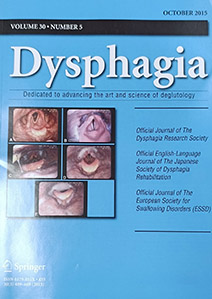
Dysphagia Volume 30 Number 5 (October 2015)
Información documento
Tipo:
Revista:
Volumen:
Número:
Catalogación:
- Publicaciones periódicas
Autor:
Varios autores
Idioma:
Fecha de Publicación:
Editorial:
Springer
Fecha de presentación:
Número de páginas:
Documentos:
ISSN:
Descriptores:
- Deglución
- Disfagia
- Logopedia
- Nutrición
- Enfermedades neurológicas
Resumen:
- Revista Dysphagia Volumen 30 Número 5 (Octubre 2015).
- Puede consultar el listado de artículos de este número haciendo clic en Ver Índice.
- Puede consultar este número presencialmente en la biblioteca del Ceadac o solicitar artículos de este número a través del correo: centro.recursos.ceadac@imserso.es
Abstract:
- Dysphagia Volume 30 Number 5 (October 2015).
- You can view the list of articles in this issue by clicking on Article Index.
- You can consult this issue in person at the Ceadac library or request articles from this issue via email: centro.recursos.ceadac@imserso.es
Observaciones:
El Ceadac dispone de ejemplares en papel de esta revista desde Marzo de 2010 (Vol 25 nº1) a Abril de 2019 (Vol 34 nº 2).
Abril de 2015 (Vol 30 nº 2)
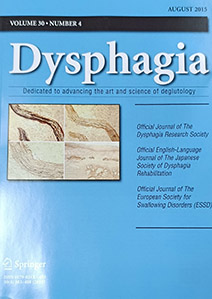
Dysphagia Volume 30 Number 4 (August 2015)
Información documento
Tipo:
Revista:
Volumen:
Número:
Catalogación:
- Publicaciones periódicas
Autor:
Varios autores
Idioma:
Fecha de Publicación:
Editorial:
Springer
Fecha de presentación:
Número de páginas:
Documentos:
ISSN:
Descriptores:
- Deglución
- Disfagia
- Logopedia
- Nutrición
- Enfermedades neurológicas
Resumen:
- Revista Dysphagia Volumen 30 Número 4 (Agosto 2015).
- Puede consultar el listado de artículos de este número haciendo clic en Ver Índice.
- Puede consultar este número presencialmente en la biblioteca del Ceadac o solicitar artículos de este número a través del correo: centro.recursos.ceadac@imserso.es
Abstract:
- Dysphagia Volume 30 Number 4 (August 2015).
- You can view the list of articles in this issue by clicking on Article Index.
- You can consult this issue in person at the Ceadac library or request articles from this issue via email: centro.recursos.ceadac@imserso.es
Observaciones:
El Ceadac dispone de ejemplares en papel de esta revista desde Marzo de 2010 (Vol 25 nº1) a Abril de 2019 (Vol 34 nº 2). Excepto:
Abril de 2015 (Vol 30 nº 2)
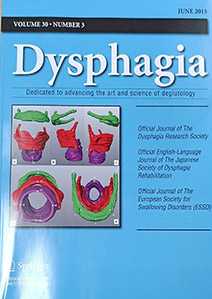
Dysphagia Volume 30 Number 3 (June 2015)
Información documento
Tipo:
Revista:
Volumen:
Número:
Catalogación:
- Publicaciones periódicas
Autor:
Varios autores
Idioma:
Fecha de Publicación:
Editorial:
Springer
Fecha de presentación:
Número de páginas:
Documentos:
ISSN:
Descriptores:
- Deglución
- Disfagia
- Logopedia
- Nutrición
- Enfermedades neurológicas
Resumen:
- Revista Dysphagia Volumen 30 Número 3 (Junio 2015).
- Puede consultar el listado de artículos de este número haciendo clic en Ver Índice.
- Puede consultar este número presencialmente en la biblioteca del Ceadac o solicitar artículos de este número a través del correo: centro.recursos.ceadac@imserso.es
Abstract:
- Dysphagia Volume 30 Number 3 (June 2015)
- You can view the list of articles in this issue by clicking on Article Index.
- You can consult this issue in person at the Ceadac library or request articles from this issue via email: centro.recursos.ceadac@imserso.es
Observaciones:
El Ceadac dispone de ejemplares en papel de esta revista desde Marzo de 2010 (Vol 25 nº1) a Abril de 2019 (Vol 34 nº 2). Excepto:
Abril de 2015 (Vol 30 nº 2)